Showing posts with label Read Alouds. Show all posts

Thursday, 18 August 2011

BOOK REVIEWS ~ "The New Treasure Seekers" - By: E. Nesbit


Alisdair and I finished reading "The New Treasure Seekers" last night ~ while we were waiting for Isobel as she was participating in an evening Daily Vacation Bible School program.  The book is narrated by Oswald Bastable (in the third person) but was authored by Edith (or just plain E.) Nesbit.  We have already read three other titles by this British writer, (two of these featured other tales about the Bastable children), so we enjoyed learning more about Oswald and his siblings.  Sometimes, for a joke, I call Alisdair "Oswald!"

This story was first published in 1904.  It's amazing how we can still delight in the antics of the Bastable children more than 100 years after the author first wrote of them with pen and paper. 

The first chapter tells a tale about "H. O." (which is short for Horace Octavius Bastable) who attempts to stowaway on a trip to Rome with his newlywed "Uncle" and his wife.  Luckily he was discovered and soon returned to his home!

Then the Bastable children attempt to perform an act of charity -- collecting money to give "poor folk" a nice Christmas.  They do manage to gather some funds and purchase ingredients to make a Christmas pudding.  However, everything soon backfires.  "We washed our hands as well as the currants.  I have sometimes thought we did not get all the soap off the currants.  The pudding smelt like a washing-day when the time came to cut it open.  And we washed a corner of the table to chop the suet on.  Chopping suet looks easy till you try" (Page 29).  Later, they tried to boil the pudding, but due to a lack of coal it was not cooked as long as it required.

"We went out into the streets.  They were pretty quiet -- nearly everybody was eating its Christmas dessert.  But presently we met a woman in an apron.  Oswald said very politely -- 'Please, are you a poor person?'  And she told us to get along with us.  The next we met was a shabby man with a hole in his left boot.  Again Oswald said, 'Please, are you a poor person, and have you any poor children?'  The man told us not to come any of our games with him, or we should laugh on the wrong side of our faces.  We went on sadly.  We had no heart to stop and explain to him that we had no games to come.  The next was a young man near the Obelisk.  Dora tried this time.  She said, 'Oh, if you please we've got some Christmas pudding in this basket, and if you're a poor person you can have some.'  'Poor as Job,' said the young man in a hoarse voice, and he had to come up out of a red comforter to say it.  We gave him a slice of the pudding, and he bit into it without thanks or delay.  The next minute he had thrown the pudding slap in Dora's face, and was clutching Dicky by the collar.  'Blime if I don't chuck ye in the river, the whole bloomin' lot of you!' he exclaimed.  The girls screamed, the boys shouted, and though Oswald threw himself on the insulter of his sister with all his manly vigour, yet but for a friend of Oswald's, who is in the police, passing at that instant, the author shudders to think what might have happened, for he was a strong young man and Oswald is not yet come to his full strength, and the Quaggy runs all too near" (Pages 35 and 36).

Other adventures follow the children.  Archibald, an unpleasant cousin, comes to visit and the revenge for his nasty behaviour comes in the form of a bar of "Maple's dark bright navy-blue indelible dye - won't wash out" (Page 55).  Archibald thinks it is soap and accidentally dyes himself all over.  The colour only began to wear off days later!

The children go to visit the Editor (who publishes Albert's Uncle's stories) and they tell him how wonderful a particular chapter of the story was.  Unfortunately, the children have actually read the tale elsewhere, prior to it being printed in that particular magazine, and so the Editor realizes something isn't as it should be.

Another day they rent a room to a man who is mentally ill and who draws artwork on the walls of the cottage in the night!  They get involved in a smuggling operation and go door-to-door selling goods without a license (and are caught by a policeman who wishes to pursue charges.)  The children also get into other scrapes, during the course of the novel, but they always manage to get themselves extricated from their troubles, in the end.

In the final chapter, "The Poor and Needy" (Page 213) Oswald says:  "When you think about yourself there is a kind of you that is not what you generally are but that you know you would like to be if only you were good enough.  Albert's uncle says this is called your ideal of yourself.  I will call it your best I, for short.  Oswald's 'best I' was glad to go and talk to that boy whose father was in prison, but the Oswald that generally exists hated being out of the games.  Yet the whole Oswald, both the best and the ordinary, was pleased that he was the one chosen to be a detachment of consolation."

I could relate to this explanation as I know there are gaps between "the person I am" and "the person I wish to be -- or think I am in my own mind."

"The New Treasure Seekers" is both a thought provoking and amusing piece of literature from a bygone day.  It's well worth the read!

***
"Oswald is a delightful narrator and the stories
 he tells are among Nesbit's best." -- Gore Vidal

Wednesday, 10 August 2011

READING ~ 150 Books Read ~ Onward to 175!


Since it's summer, we have not been as regular with our reading ... we've been busy having fun at Daily Vacation Bible School, visiting Grandma and Grandpa and jumping on our "new to us" trampoline!  But Isobel's tally of picture books read has now surpassed the 150 mark.  There are so many good books out there.  Every trip to the library is an exciting adventure because we never know what stories will unfold when we open the covers of the books we've borrowed.  Laughter and tears ~ learning and fun, all wrapped up in the written word.  We are looking forward to reading more as school begins again and we are back into something of a routine again.

Thursday, 4 August 2011

BOOK REVIEWS ~ "Sweet Clara and the Freedom Quilt" ~ By: Deborah Hopkinson


What can I saw about "Sweet Clara and the Freedom Quilt?"  This is a SWEET picture book about what it was like to be a slave and to decide to runaway, via the Underground Railroad, to freedom.  Deborah Hopkinson's text is accompanied by bright paintings done by the artist, James Ransome.  Ransome dedicates his contribution to the book to "Emma Ransom, the first slave of Pattie and General Matt W. Ransom, and all other Ransom slaves on Verona Plantation."  It's obviously a family connection...

This fictional story begins before Clara "was even twelve years old" and is told from her perspective.  Although we don't know if an actual Clara ever existed, the touching story is based on facts taken from the lives of those who were slaves and managed to escape through the Underground Railroad.

Clara was "sent from North Farm to Home Plantation 'cause they needed another field hand.  When I got there, I cried so much they thought I was never gon' eat or drink again.  I didn't want to leave my Momma."  Clara works with another slave, known as "Young Jack" and eventually begins to adjust to her new way of life, though she is still secretly determined to find her Mother.

The dialogue is written in an Afro-American southern dialect and outlines how her Aunt Rachel (who "was raising me now" although "she wasn't my for-real blood aunt") taught Clara to be a seamstress so that she could avoid the harsh conditions out in the fields.  While working in the house she overheard many things and was able to create a "map" to freedom sewn out of scraps of cloth, leftover from her sewing projects.

"I worked on the quilt for a long time.  Sometimes months would go by and I wouldn't get any pieces sewn in it.  Sometimes I had to wait to get the right kind of cloth -- I had blue calico and flowered blue silk for creeks and rivers, and greens and blue-greens for the fields, and white sheeting for roads.  Missus liked to wear pink a lot, so Big House, the Quarters, and finally, the Big House at the North Farm, they was all pink."

"The quilt got bigger and bigger, and if folks knew what I was doin' no one said.  But they came by the sewin' room to pass the time of day whenever they could. 'By the way, Clara,' a driver might tell me.  'I heard the master sayin' yesterday he didn't want to travel to Mr. Morse's place 'cause it's over twenty miles north o' here.' "

"Or someone would sit eatin' Cook's food and say, so as I could hear, 'Word is they gon' plant corn in the three west fields on the Verona plantation this year.' "

"When the master went out huntin', Cook's husband was the guide.  He come back and say, 'That swamp next to Home Plantation is a nasty place.  But listen up, Clara, and I'll tell you how I thread my way in and out of there as smooth as yo' needle in that cloth.' "

"Then one night the quilt was done.  I looked at it spread out in the dim light of the cabin.  Aunt Rachel studied it for the longest time.  She touched the stitches lightly, her fingers moving slowly over the last piece I'd added -- a hidden boat that would carry us across the Ohio River.  Finally, they came to rest on the bright star at the top."

"She tried to make her voice cheery.  'You always did like to make patterns and pictures, Clara.  You get yourself married to Young Jack one of these days, and you two will have a real nice quilt to sleep under.' "

" 'Aunt Rachel, I couldn't sleep under this quilt,' I answered softly, putting my hand over hers.  'Wouldn't be restful, somehow.  Anyway, I think it should stay here.  Maybe others can use it.' "

" 'Aunt Rachel sighed.  'But aine you gon' need the quilt where you goin'?' "

"I kissed her.  'Don't worry, Aunt Rachel.  I got the memory of it in my head.'  It rained hard for three days the next week.  Me and Jack left Home Plantation in a dark thunderstorm.  The day after, it was too stormy to work in the fields, so Jack wasn't missed.  And Aunt Rachel told them I was sick.  We went north, following the trail of the freedom quilt.  All the things people told me about, all the tiny stitches I took, now I could see real things.  There was the old tree struck down by lightning, the winding road near the creek, the hunting path through the swamp.  It was like being in a dream you already dreamed.  Mostly we hid during the day and walked at night.  When we got to North Farm, Jack slipped in through the darkness to find what cabin my momma at.  Then we went in to get her and found a little sister I didn't even know I had.  Momma was so surprised."

" 'Sweet Clara!  You growed so big!'  Her eyes just like I remembered, her arms strong around me."

" 'Momma, I'm here for you.  We goin' North.  We know the way.  I was afraid they wouldn't come.  But then Momma say yes.  Young Jack carried my sister Anna, and I held on to Momma's hand.  We kept on as fast as we could, skirting farms and towns and making our way through the woods.  At last, one clear dark night, we come to the Ohio River.  The river was high, but I remembered the place on the quilt where I'd marked the crossing.  We searched the brush along the banks until at last we found the little boat.  'This was hid here by folks in the Underground Railroad,' I said.  The boat carried us across the dark, deep water to the other side.  Shivering and hungry and scared, we stood looking ahead.  'Which way now?' Jack asked me."

"I pointed.  The North Star was shining clear above us.  'Up there through the woods.  North.  To Canada.' "

"Sometimes I think back to the night we left when Young Jack came to wake me.  I can still see Aunt Rachel sitting up in her bed.  She just shook her head before I could say a word."

" 'Before you go, just cover me with your quilt, Sweet Clara,' she say.  'I'm too old to walk, but not too old to dream.  And maybe I can help others follow the quilt to freedom."

"Aunt Rachel kept her word.  The quilt is there still, at Home Plantation.  People go look at it, even folks from neighbouring farms.  I know because some of them come and tell me how they used it to get free.  But not all are as lucky as we were and most never can come.  Sometimes I wish I could sew a quilt that would spread over the whole land, and the people just follow the stitches to freedom, as easy as taking a Sunday walk."

"Let My People Go"
A painting by James Ransome

Tuesday, 2 August 2011

COOKING/BOOK REVIEWS ~ "Amelia Bedelia Bakes Off" ~ With Recipe For Amelia Bedelia's Sheet Cake

I remember laughing and enjoying books about "Amelia Bedelia" when I was a youngster, so we picked up a couple titles featuring this confused housekeeper/maid when we were at the main library last week.  In "Amelia Bedelia Bakes Off" the heroine runs a bakery for a friend.  At the back of the book a recipe for "Amelia Bedelia's Sheet Cake" is provided.  Of course the children wanted to try making the recipe!  It called for just nine simple ingredients (that we already had on hand) -- so we made some cake on Saturday afternoon.

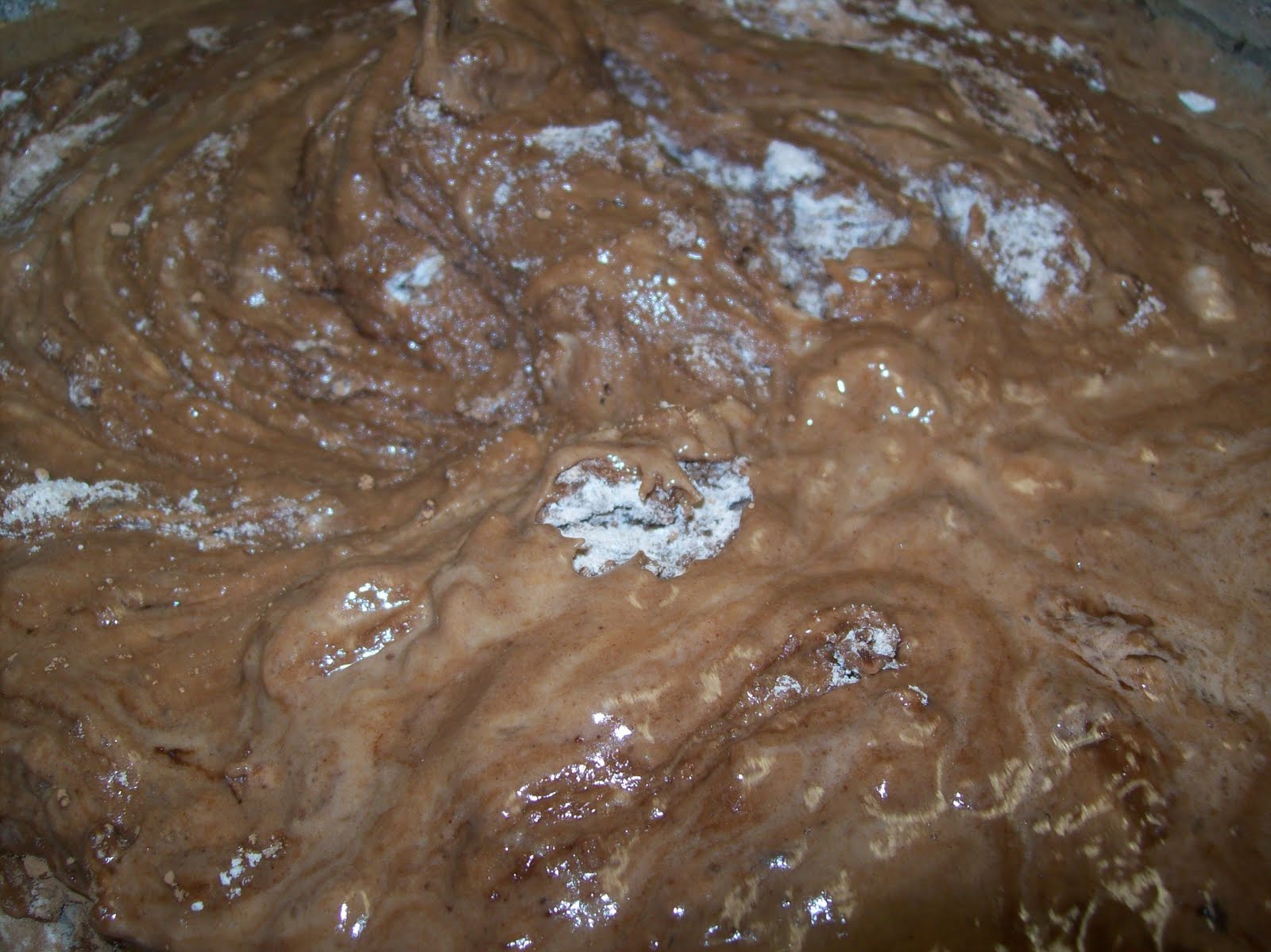
The verdict?  Delicious and super easy.  Probably easier than using a packaged cake mix and an electric mixer.  It definitely tasted better than a mix!  Why so easy?  All the ingredients were dumped directly into a 9 x 13 cake pan and then mixed together with a fork!  Couldn't be simpler!

AMELIA BEDELIA'S SHEET CAKE

3 cups flour
1 3/4 cups sugar
2 teaspoons baking soda
1 teaspoon salt
2/3 cup cocoa
3/4 cup vegetable oil
2 Tablespoons vinegar
1 teaspoon vanilla
2 cups water

Sift the flour, sugar, baking soda, salt and cocoa directly into an ungreased 9" x 13" pan.  Add oil, vinegar, and vanilla.  Pour water over all ingredients.  Mix with a fork until smooth.  Bake at 350 degrees  for 25 to 30 minutes.  Cool the cake and ice it in the pan with your favourite frosting (we used a purchased container of prepared icing).

While we were at the library, we also borrowed "Amelia Bedelia Goes Camping."  The poor woman had never been camping before and "pitched the tent" by throwing the bag with the tent inside into the bushes!  She certainly has a lot to learn. 

According to the list on the back of "Amelia Bedelia Bakes Off," there are 23 different "Amelia Bedelia" adventures.  Two down ... and 21 to go ... that's some serious reading still to do!

... Dry ingredients ...

... Adding liquid ingredients ...

... Stir! ...

.... Ready for the oven...

... Baked and cooling ...

... Iced and ready to slice...

... Delicious! ...

Friday, 29 July 2011

BOOK REVIEWS ~ "Wibble Wobble" By: Miriam Moss

When I ordered "Wibble Wobble" through inter-library loans, I had no idea how appropriate this "Tiger Tale" book, written by Miriam Moss, would be for both Alisdair and Isobel!

"Wibble Wobble" is a heartwarming story about a little boy named William.  On the first page the reader is told, "All William ever wanted in the whole world was to have a loose tooth."

It seems to William that his "teeth seemed stuck, superglued to his gums.  'It isn't fair,' said William.  'Everyone else at school tells loose tooth stories.  'Sammy swallowed his . . .  Rosa's fell down the toilet . . . and Louie's flew out when he scored a goal!' "

Then William learns he could get a silver dollar from the Tooth Fairy, if he had a loose tooth that came out!  He tells Grandma about three children who lost their teeth at school. 

" . . . 'if it comes out at school, you have to keep it somewhere safe.'  William continued, 'Vicky tied hers into the knot in her shoelaces . . . and Martin hid his in a cotton ball in his ear.  AND . . . today Jasmine's got lost up her nose.  Mrs. King said she'd keep them safe from now on.' "

The very next day, William discovers his very first loose tooth.  He is excited and shows his friends.  For several pages William is busy with his tooth ~ "push, pull, jiggle, joggle.  poke, flick, wibble, wobble."

Then, one day in gym class "William did his best somersault ever.  And when he stood up, his tooth was sitting on his tongue!  William took it out and looked at it.  It was so tiny!  'I'll look after it until you go home,' said Mrs. King, wrapping it in a tissue and puttling it on top of the filing cabinet. 'Then can I take it home?' asked William, feeling a bit wobbly himself.  'Of course,' said Mrs. King.

When William's mother arrived to pick him up, he tells her, "My tooth came out!'  'Oh William!' said Mom.  'Where is it?'  'It's on the filing cabinet, wrapped up in a tissue,' said William.  'Here it is,' said Mrs. King.  Then she said, 'Oh, it's gone.'

They searched everywhere, to no avail.  Then William remembers that when Louie got red paint in his eye, Rosa had handed him a tissue to wipe it out.

"Mom and Mrs. King looked at each other."  Despite their obvious misgivings, the two women continued searching in the classroom and Mom eventually finds the tooth in a crumpled up tissue in the wastebasket.  A very relieved William took his tooth home and the "next morning [he] looked under his pillow.  There lay a little wooden box.  He lifted the lid and inside was a shiny silver dollar!  When William got to school, he told everyone his loose tooth story. 'I would think you'd like a rest from loose teeth for a while, William!' said Mrs. King.  'Yes,' said William.  'I would.'

But when William spends his silver dollar on an enormous ice cream, unwraps it and takes a big bite of the "ice-cold, rock-hard toffee ... another tooth wiggled!  Push, pull, jiggle, joggle, poke, flick, wibble, wobble."

***  
One evening, after we had read this book, Isobel was complaining that eating the meat on her dinner plate was "hurting her teeth."  I was scared she had another cavity... at least until I looked into her little mouth and discovered that one of her bottom front teeth was very loose. A few days later, it fell out and we discovered there was a new tooth coming in a little bit back of where the original one had been.  Now she has a second wiggly tooth!

Meanwhile, in about the space of a week, Alisdair lost, not one, but TWO molars!  I laughed and said pretty soon I'd have to start feeding them both baby food again as they wouldn't have enough teeth to chew their dinner anymore!

This photo, taken on the plane
 to Victoria, shows all the spaces
 Alisdair currently has between his teeth!
 It's funny how, although they are almost six years apart in age, that in many ways, they are going through the same stages together -- learning how to ride two-wheeled bikes and losing teeth are just two of these areas.

Push, pull, jiggle, joggle, poke, flick, wibble, wobble ... I wonder who will be the next to lose another ....Isobel?  Or her brother?!


... One missing and the tooth next to it is wiggly,too!
***
On our last trip to the main library in North Battleford we borrowed another book on this topic.  It is called "My Tooth Is About to Fall Out" by Grace Maccarone and is published as part of the "Hello Reader -- Level One" Scholastic series.  It's a rhyming book about a little girl.  The conclusion of the poem follows:

"Then tonight I'll go to sleep
And the Tooth Fairy will creep
into my room.
She'll take my baby tooth,
and maybe,
if I am lucky,
she will leave
something behind
for me to find.
I had twenty baby teeth --
with big ones growing underneath.
My roots, I think,
dissolve and shrink
until they're small.
And so my teeth get loose and fall.
My big teeth will begin to show
from under my gums, way below.
I can't wait to see them.  They'll look great!"

Tuesday, 26 July 2011

BOOK REVIEWS ~ "Mark Twain at Work!" By: Howard Goldsmith


If you've ever read "Tom Sawyer" you will recall the incident where the mischievous lad encourages other folk to whitewash a fence, thus getting out of the work, himself.  But you may be surprised to learn this situation actually took place in the life of the author, Mark Twain.

"Mark Twain at Work!" is a "Level 2" book in the "Ready-to-Read" series.  It is one of several books that focus on the "Childhood of Famous Americans."

The reader soon learns that "Mark Twain was born in a small Missouri town in 1835" and that "his real name was Samuel Clemens" (Pages 3 and 4).

It seems he had a happy childhood, playing with his cousins, exploring the woods, climbing trees, picking berries and swimming in the brook. The text indicates Clemens was always busy "hopping about like a jumping bean" (Page 7).

Once he took a garter snake to school.  "The snake wriggled its way across the room.  It stopped at the feet of their teacher, Mr. Cross.  Mr. Cross glared across the room at Sam.  'Sam-u-el Lang-horne Clem-ens!' he called.  'Take that snake outside!  At once!' " (Pages 11-13).

Athough the boy obeyed, the next day the teacher told the lad's Mother what had happened.  "Sam's Mother punished him by making him paint the tall, wide fence around their yard.  'That's an awful lot of work!' Sam complained, staring at the fence.  It looked a mile high.  'Blame yourself!' his Mother answered." (Pages 15 and 16).

Sam tried to get his friend, Sandy, to help him paint the fence, but he was on an errand to fetch water from a well.  Then along came another friend, Will Bowen.  Clemens told Will painting was fun. "'Nothing is work if you enjoy doing it,' Sam said.  'Can I brush awhile?' Will asked. 'What will you give me to brush?' Sam said.  'Give you?'  Will asked, puzzled.  'Of course,' Sam said.  'Nothing for nothing.' "  (Pages 22 and 23).  So Will traded an apple for a chance to paint the fence!

Later, John Briggs came along.  He gave Sam a tadpole for an opportunity to swing the paint brush.  When he got tired, a friend name Frank had the next chance to brush the fence. "By late afternoon all the boys in town had painted the fence.  Sam was not tired at all!  Plus he now had two tadpoles, ten marbles, a box of worms, five pieces of orange peel and other things" (Pages 26 and 27).

" 'Someday,' Sam promised himself, ' I am going to write all this down.'  He would turn it into a funny story.  He loved making people laugh.  As he grew older he learned to weave webs of magic words that cast a spell.  Years later Sam wrote books under the name Mark Twain.  The story of the fence grew into one of Mark Twain's most famous books "The Adventures of Tom Sawyer."  Mark Twain became one of America's favorite humorists.  After The Adventures of Tom Sawyer, Mark Twain wrote The Adventures of Huckleberry Finn.  He said most of those adventures were true.  They all happened when he was a boy" (Pages 28 to 31).


***

TIMELINE OF MARK TWAIN'S LIFE

1835 - Born in Florida, Missouri, as Samuel Langhorne Clemens
1839 - Clemens moves to Hannibal, Missouri
1843 - Twain attends William Cross's one-room schoolhouse.  Young Twain writes:

'Cross by name and cross by nature --
Cross jumped over an Irish potato."

1848 - Apprentices at the Missouri Courier
1852 - Twain's first published sketch appears in the Boston Carpet Bag
1857 - Begins work as an apprentice pilot on the Mississippi River
1861 - Moves to Nevada with his brother Orion and tries mining
1862 - Takes a job as a reporter, for the Virginia City Territorial Enterprise
1865 - Wins fame with his comic take "Jim Smiley and his Jumping Frog" (later published as 'The Celebrated Jumping Frog of Calaveras County.')
1866 - Gives his first lecture on his experiences, beginning a career as a humorous lecturer
1870 - Marries Olivia Langdon
1871 - They settle in Hartford, Connecticut
1876 - The Adventures of Tom Sawyer is a great success
1882 - Publishes The Prince and the Pauper
1884 - The Adventures of Huckleberry Finn is published in London; comes out the following year in America
1889 - Publishes A Connecticut Yankee in King Arthur's Court
1904 - Wife Olivia dies at age sixty
1910 - Dies at age seventy-five in Redding, Connecticut.   

***


BOOK REVIEWS ~ "Under the Quilt of Night" By: Deborah Hopkinson

Another book about escaping from slavery is "Under the Quilt of Night" by Deborah Hopkinson.  The illustrations in this volume are by James E. Ransome.

In "A Note About the Story" at the back of the picture book, we learn this is an "imagined journey.  It is a fictitious story inspired by the Underground Railroad, and it mixes fact and folklore.  The Underground Railroad, of course was not actually underground.  Nor was it a railroad.  It was a secret network of people who helped others to escape slavery.  It was most active in the 1850's, in the years just before the Civil War."

Hopkinson also tells her readers:  "Just as we don't learn the name of the girl who tells this story, we don't know the names of most who escaped on the Underground Railroad.  Activities took place in secret and weren't written down.  Those fleeing slavery faced incredible danger and hardships.  The free blacks and whites who helped them also faced risks.  Many stories have grown up around quilts and the Underground Railroad.  Some think quilts included hidden meanings or were hung to mark safe houses, while others believe these stories are simply folklore."

"We do know that fugitives were hidden in many ways, sometimes in secret rooms or tunnels, other times in wagons with false bottoms, or simply under straw in back of carts.  We also know from songs like "Follow the Drinking Gourd" that enslaved people used the North Star to help them locate north, where Canada and freedom lay.  In this story, the girl finds a star someone has carved in the floor as a hopeful sign of freedom."

"When I was a fourth grader, the Underground Railroad was mentioned in just a few lines in our history textbook.  Today many books and Internet sites have information about this part of our history.  In communities people are working together to remember family stories and to find and preserve Underground Railroad routes and houses.  But some of our past may always be hidden from us, " explains Hopkinson.

... a quilted pattern on the first and last pages of the book ...
"Under the Quilt of Night" is composed of six sections titled "Running," "Waiting,"  "Watching," "Hiding," "Traveling," and "Singing."  The text is almost poetical.  Under the heading, "Running," on the first page of the book we read, "I'm young but my legs are strong.  I can run." 

... RUNNING ...
The text continues, "I run so fast, I lead the way; the ones I love race right behind.  Pounding dirt and grass, jumping rocks and roots, my feet make drumbeats on the path."

The next stanza says, "I'm running far away from the farm where the master worked us, hoeing and picking, mending and sewing till my hands got raw."

The master is hot on the trail of the slaves.  The girl says he wants to track her and "chase me till my breath is gone, fence me in to be a slave again."  But the unnamed girl, at the heart of the story, will have none of that and says, ". . . I'll make my steps quick whispers in the dark.  I'll run where he won't find me, under the quilt of night."  The group of slaves find a hidden boat alongside a river and cross safely to the other side.

The next section is called, "Waiting."  It is written in such a way that you can imagine what it was like to be with the slaves awaiting nightfall.  "Runaways like us must hide in daylight.  So come morning we crouch in the bushes till night.  It's hot.  Sweat dribbles down my neck.  Thorns rake my arms and legs.  In the still afternoon, mosquitoes whine and tease just like the overseer's children did.  All I can do is wait for the cover of darkness.  Oh, if only I could dance into the open and sing so loud the stars would hear and hurry out to guide our way!" 

"Watching" is the next part of the book.  Hopkinson writes, "We run and hide, run and hide.  My cuts sting, my bites itch.  I'm hungry all the time.  One day at dusk we make our way to the patch of woods at the edge of a town.  There are more houses here, people, roads -- danger.  The others rest, while I keep watch for a sign from the Underground Railroad -- the friends who will help us get free. . . . Then I see a woman walk through her yard wearing a plain dress.  On her arm she carries a quilt to air.  She hangs it over the fence, then looks to the woods, just once.  I stare with all my might.  I know what to look for:  in most quilts, center squares are red for home and hearth.  But these centers are a dark, deep blue.  This house hides runaways!"

"I'm brave enough to go forward first.  When at last the stars are up, I pull the darkness around me and run through long, wet grass.  My foot trembles on the wooden step, and my knock is shivery and quick -- like the beating of my heart.  'Who's there?' comes a voice.  I swallow hard before I give the password.  What if I am wrong?  But I trust the quilt, so I say, 'The friend of a friend.' "

... A signal??
Luckily the girl had correctly read the coded signal.  In the section titled "Hiding," the story continues.  "A man and woman let us in.  They give us clean clothes, hot stew and biscuits, sweet cherry pie.  We talk in whispers so we won't wake up their little boy, already tucked in bed.  Their daughter, just my age, lets me hold her kitten.  We follow her lantern up narrow stairs to a secret room.  'Sleep now.  Tonight we'll keep watch,' she says.  I lie awake wondering about others who have hidden here.  I won't ever know their names.  But I find a message, a rough carved place in the wood under my mat.  I make my fingers into eyes to explore it.  Just before I fall asleep I see it is a star."

But soon their sleep is disturbed.  In the portion of the book called "Traveling" the girl is awoken abruptly.  " 'Wake up!  Hurry!  Your master and his men are close behind!'  Our friend whisks us through the last folds of night and hides us deep in his wagon.  The cold boards make me shiver.  Straw pricks my skin like needles.  We go north across a bridge, under trees, a zigzag of here and there.  We can't turn back -- we would be beaten, sold away, our chances gone for good.  We must go on or die.  I hang on tight.  Fear is so real, it lies here beside me.  The wagon rattles, horses clomp.  Suddenly I tremble.  Voices!  We're caught."

... "We're looking for runaways..."
" 'We're looking for runaways.  What's in your wagon?' barks a voice.  'Eggs, sacks of grain, vegetables to sell at morning market,' says our driver, smooth as honey.  'Search me if you like.  I'm no friend of the slave.'  I keep still as a rock though it feels like my heart will split.  But the searchers are fooled and at last they gallop off.  Our friend laughs and cracks the reins.  He calls to his horses:  'Giddyup, Hope and Liberty!'  And the wagon rolls on."

The final chapter of the book is called, "Singing."  "Birds wake, a rooster calls.  I listen to night softly falling away.  We stop at a little church deep in a piney wood.  I pick the straw from my hair and rub my stiff, cramped legs.  Our friend takes a stick and draws a map in the dirt of the road we'll take to Canada.  'These good folks will carry you on,' he says.  'You're almost to freedom now.'

... "You're almost to freedom now..."
"Over the trees the sun comes up.  The dark pines glow like gold.  Freedom!  I take a deep breath and when I let go my voice flies up in a song.  My own song of running in sunshine and dancing through fields.  I'll jump every fence in my way." 

... "Freedom!  I take a deep breath and when I let go my voice flies up in song."

Friday, 22 July 2011

DID YOU KNOW? ~ Facts from "A String of Beads" By: Margarette S. Reid

Would it surprise you to learn that the word "bead" comes from the Anglo-Saxon word "bede" (which means "prayer"), or that each shape and type of bead has a name and a history?

At the back of this picture book, (which is both a story about a girl and her grandmother as well as an  informational volume), are three pages jammed packed with interesting information about "BEADS." These include:

* Beads probably were first made at about the same time in different places around the world.  The oldest ones discovered so far were found in France.  They were made from animal teeth and bones about forty thousand years ago.

* Beads from kangaroo bones have been discovered in Australia.

* In caves in Korea, people have found very old beads made from deer toe bones.

* Disk-shaped beads made from fossil dinosaur and ostrich eggshells were found in the Gobi dessert in Asia.

* Bones from fish and snakes have natural holes that make them easy to string.  Many early peoples used them as beads.

* We know beads were important to people who lived long ago because we find beads in their graves.  In South America, strings of tiny lizard-egg beads were found along with gold jewelry in clay pots.

* A wall painting in an Egyptian tomb shows craftsmen making, drilling, and stringing beads.  Everyone, including pets, wore beads in Egypt.  They thought beads brought them luck.  Sha means "luck" in Egyptian, and shasha is the Egyptian word for bead.

* As early people moved around to find food, they carried beads with them.  Wherever they went, they picked up new ideas about how to make and use beads.

* For thousands of years, up to the present day, people in many countries used a calculator made of beads to keep track of what they bought and sold.  It is called an abacus.  Abacus beads are usually made of wood.

* The English word bead comes from the Anglo-Saxon bede, meaning "prayer." Prayer beads are used by Hindus, Buddhists, Muslims and Christians. Although the beads are different, their purpose is the same: to guide worshipers through daily prayers.

* Around the time of Columbus, in the city of Venice, Italy, craftsmen made wonderful glass beads. To keep their methods secret, all Venetian bead makers had to live and work on one island. Although the craftsmen were threatened with death if they tried to leave that island, the secret was impossible to keep. Other centers sprang up to supply the growing demand for beads.

* Animals such as elephants and walruses that once provided ivory from their tusks are now protected. The tagua nut is an ivory look-alike that can be used for beads. It grows in the rain forests of Ecuador in South America.

* Ever since the first pearl was found inside an oyster, people have prized pearl beads.  But until two hundred years ago, people didn't know how they were formed.  Some people thought that oysters swallowed raindrops.  Now we know that when a grain of sand gets inside an oyster's shell, the oyster coats it with layers of smooth, lustrous material called nacre.  Behold -- a pearl!


* Myth and mystery have grown up around certain beads.  In Qom, Iran, people hang large, turquoise-colored beads around their donkeys' necks to protect them.  Eye beads and face beads are believed to have the power to protect their wearers from evil.  Those who wear Bodom beads -- beads that are usually yellow with black or dark-gray inner cores -- expect the beads to bark to warn them of danger!

* Native American women who were skilled at embroidering clothing with porcupine quills eagerly traded furs for bright-colored seed beads.  The explorers Lewis and Clark wrote in their journals that they must be careful to keep enough beads in reserve to trade for food supplies on their return trip.

* Japanese artists carve delicate bead sculptures of fruit, flowers, butterflies, and even dragons from a smooth, hard stone called jade -- and also from peach stones!

* Today in Africa, as in the past, village craftsmen specialize in making beads from the materials they find around them.  The Dogan of Mali make granite beads.  In Mauritania, glass is recyled by crushing bottles to make beads that have a soft, grainy look.  The Turkana people make aluminum beads, sometimes by melting down cooking pots and pans.  In Kenya, it is the custom for a woman who is waiting for her baby to be born to wear an amulet made from large, shiny brown beans.  In Malawi, bright red and black beans make beautiful beads.  They look delicious, but they are poisonous, so don't eat them!

* You can make beads from ordinary things around you -- seeds, shells, acorn caps, paper straws, pasta, even buttons -- just about anything you can string.

* All over the world, for as long as we can remember, people have loved beads and treasured them.


***

In the biographical facts, on the dust jacket, about author, Margarette S. Reid, we are told she has been "fascinated with beads from childhood (when she wore them playing dress-up).  Reid still treasures 'old' family necklaces, such as carved sandlewood beads brought from India by her missionary aunt or crystal beads that looked sparkly as diamonds to her.  As a Camp Fire Girl, Margarette worked hard to earn wooden honour beads. When she wrote a letter to Child Life about one project worth eleven beads, and the magazine published it, she knew she wanted to become a writer.  She also became a secondary and elementary-school teacher, and a mother and grandmother.  She lives in Gaithersburg, Maryland, and is also the author of The Button Box.

Wednesday, 20 July 2011

BOOK REVIEWS ~ Robin Hill School ~ "The Garden Project" By: Margaret McNamara


Since our garden is growing fast and furiously (thanks to abundant rains lately), Isobel especially enjoyed the book, "The Garden Project" from the Robin Hill School "Ready-to-Read" series (Level 1), written by Margaret McNamara.

In the book, the teacher, Mrs. Connor, decides to turn on old sandbox into a garden plot.  "Parents filled the sandbox with dark brown dirt." After dividing the garden into four smaller plots, four students were assigned to planting seeds in each "square." 

"Nick, Katie, Emma and Eigen planted radish seeds.  Nick made holes in the dirt with his fingers.  Emma dropped one seed in each hole.  Eigen covered them up."

Some of our radish crop...
At this point, Isobel told me about her own experiences, poking her finger into the dirt and helping her stepdad, John, planting seeds.

Another foursome planted sunflower seeds.  "Sunflowers are big.  'And they need a lot of sun!' said Jamie."  (We have a few sunflower plants in our garden, too!)

Some other students planted pea pods while "Neil, Nia, James and Megan planted lettuce."

When Neil begins complaining about disliking vegetables, Mrs. Connor takes it in stride and says, "We shall see." 

"Every day the first graders tended their garden.  They watered.  They waited.  After one week tiny green sprouts came up.  The class picked weeds.  They kept birds away.  They watered some more.  They waited some more.  After three weeks, little lettuces were growing."

The sunflowers started to grow taller -- even taller than some of the children!  When the garden produce was ready to harvest, "Mrs. Connor made a lettuce and radish salad, with pea pods on top."

'Yummy!' said Neil. "Yes," said Becky.  She bit into a pea pod.  "It tastes just like sunshine."

Reading this little book to your child will help encourage them to try gardening for themselves. 

***

Alisdair and I were only gone to Victoria for six short days but the growth of the garden over that brief period was remarkable!  We took a few photos of our plants to show Grandma and Grandpa.  The potatoes are almost waist high ... it's unlikely we'll be able to rotovate between the rows again this season!  We thought we'd post a few photos of our radish crop (and the other plants) to accompany this book review.  I know Isobel will be very busy helping out, once harvest time arrives in Saskatchewan!

The potato patch ... plants are up to Alisdair's waist!


Tomato plants ... Isobel's already eating cherry tomatoes from the garden!

Giant sunflowers and squash ...

Tuesday, 19 July 2011

BOOK REVIEWS ~ "Katie Morag and the Wedding" ~ By: Mairi Hedderwick

We were lucky enough to receive another "Katie Morag" book through inter-library loans.  This one centers around the wedding of Katie's Granma Mainland and one of the islanders on Struay, Neilly Beag.

The synopsis of book from the website for "Waterstones" (a British bookseller) is as follows:

"Romance has been brewing on the island between Neilly Beag and Granma Mainland and everyone is thrilled when they announce that they are to be married. Everyone, that is, except Grannie Island. For some reason that Katie Morag can't fathom her granny is not happy at all. But Granma Mainland has a surprise in store for Grannie Island, one that makes her very happy indeed!"

Like with any wedding, preparations are underway with invitations being sent out and the Village Hall decorated for the grand occasion.  It seems like all the islanders have caught "wedding fever" -- that is, everyone except Granny Island, who seems quite cross about the whole thing.  When Katie Morag McColl asks why her Granny isn't happy about the wedding, no one answers her.  Finally she writes and asks the bride-to-be why her "other Granny" might be upset about the pending wedding.  Granma Mainland doesn't answer but she does come to the rescue and solve the problem.

It turns out that there is a Grandad Island.  He likes to travel while Granny Island doesn't like leaving the Isle of Struay.  In fact, Grandad flies a helicopter!  Katie Morag manages to get Granny Island to go for a ride with her husband but it is obvious from the illustrations that she isn't enjoying the trip. Grandad Island and his wife DID enjoy the wedding and even took to the dance floor.  But there is no happy ending.  Although Katie Morag does manage to get Granny Island to go for a helicopter ride, with her husband, the reader is told that "Grandad Island loved travelling and never stayed in one place for long.  'East, West, Home's Best!' insisted Grannie Island, clinging to her seat  like a limpet. Katie Morag knew then, that Grandad Island would be leaving soon."  Katie Morag asked him, " 'Grandad, when you go travelling can I come too sometimes?' "  He replied, 'Certainly, Katie Morag -- anywhere in the world.'  Katie Morag was thrilled.  She looked forward to visiting Fuay, the city on the mainland and now, anywhere in the world!  But it was good to know that Grannie Island would always be there on the Island of Struay when she got back home."

The detailed illustrations are delightful.  Here are some photos of our favourites:

Katie Morag pushes her brother Liam home
 after a visit with Grannie Island.  On the way, Neilly
 Beag gives her a stack of wedding invitations to
 take to the Post Office.

I love these "fish wives" -- carrying their shopping
 with sheep in front and fishing nets and traps behind them!

Neilly Beag is definitely in love ... and grabbing
 his beloved's bottom!  Or is he saving her
 from falling off the stool?  The 'Wedding Menu'
 consists of Lobster Claw Soup or Stuffed Turnip,
 Haggis Burgers or Carrot Steaks,
 Chips and for dessert, cake and ice cream.

Neilly and Gramma Mainland are celebrating! 
They are married .... at last!

Grannie Island is happy, too --
 dancing and celebrating with her long lost husband.
The bride and groom set off on their honeymoon ... via boat, of course!
Destination - the Island of Fuay.  It is uninhabited (except for sheep).
Note - There is a box of "Sheep Dip" in the boat!
A crowd bids the honeymooners farewell. 
The kilted boys are hanging up a sign saying "Haste Ye Back!"

Grannie Island 'clinging to her seat like a limpet!'

Tuesday, 5 July 2011

BOOK REVIEWS ~ "Little Sure Shot: The Story of ANNIE OAKLEY" By: Stephanie Spinner


"The Story of Annie Oakley" is told in a "Step into Reading" book called "Little Sure Shot."  This is a "Step 3" book and is written by Stephanie Spinner and illustrated by Jose Miralles.  It was published by Random House:  New York in 1993.

Alhtough the 48 page book was too difficult for a beginning reader like Isobel, she still enjoyed the story of Annie Oakley and listened to the tale with interest.

This photograph of Annie was on Page 4, however in the copy we were reading, it was slightly ripped, so we could not see her face:

Annie Oakley
The story begins in the fall of 1869.  Phoebe Ann Moses is nine-years old and "sits alone in a run-down farmhouse.  She is worried her family is very poor.  They work hard, but they have no money.  They never have enough to eat.  The girl wants to help.  She has an idea.  That is why she is in the house by herself.  The idea scares her a little.  The girl looks at her father's gun.  No one in the family is allowed to shoot it.  Her mother says it is only for protection.  But the girl knows guns are good for hunting.  She has watched men shoot birds and animals for food.  Now she wants to try.  The girl takes the gun off the wall.  It is heavy.  It is taller than she is.  It smells of oil and gunpowder.  Mama will not like this, thinks the girl.  But I cam going to do it anyhow.  I have to" (Pages 5 and 6).

And so the reader is introduced to the girl who would eventually become famous as "Annie Oakley."  Phoebe takes the gun into the woods and shoots the first things she aims at ~ a squirrel.  "Her family will have a good meal that night.  She has found a way to feed them." (Page 8).  "Life was never the same for the Moses family after Annie picked up that gun.  She put food on the table.  She even sold the game she shot.  A fancy restaurant bought the quail and grouse.  A trader named Frenchy La Motte bought the foxes, minks and raccons for their skins.  For the first time ever, Annie's family didn't have to worry about money" (Pages 9 and 10).

But the hard times didn't completely end.  Annie's mother remarried but she still "struggled to work as a country nurse and take care of her children.  They wore old, raggedy clothes.  Often they went hungry.  There was never any money for books.  That meant Annie and her brothers and sisters couldn't go to school" (Pages 10 and 11). 

"Annie wished she could read and write.  Once she even took a job so she could go to school.  But the other children made fun of her hand-me-down dresses and her worn-out shoes.  They even made fun of her name, calling her Moses-Poses.  Annie never went back" (Pages 11 and 12).

Annie's mother wanted her daughter to get an education.  Her mother wanted Annie to "act like a lady" and felt that "guns were for boys."  "Annie wanted to be a lady.  But shooting was important to her.  Why couldn't a lady be strong, and brave, and a crack shot, too?  Annie just couldn't understand" (Page 12).

So, when she was fifteen, Annie was sent to Cincinnati, Ohio to live with her sister Lyda and her husband Joe.  Lyda told her mother that in the city Annie would be able to go to school and become a young lady.

"Annie did like Cincinnati.  She liked the crowds, the bright lights and the steamboats on the Ohio River.  But best of all she liked the shooting galleries.  There she could shoot to her heart's content.  The tin ducks gliding by were so much easier to hit than live birds!" (Page 14).

"One day Annie noticed a man watching her shoot.  When she put down her gun, he came over and tipped his hat. 'Miss, would you like to earn some money doing that?' he asked.  'How?' said Annie.  'In a shooting match,' he said.  'Winner gets a hundred dollars.'  Annie was amazed.  A hundred dollars was a lot of money -- more than many people earned in a year" (Page 14).

Annie agreed and a date was set.  "She was up against a famous sharpshooter named Frank Butler.  He went around the country giving shooting exhibitions to crowds even bigger than this one.  When Frank Butler saw Annie, he laughed.  'That little thing?' he said.  'She's only a girl!'  Annie's cheeks burned.  Suddenly she didn't care that Frank Butler was famous.  Or that he was wearing medals from all the contests he'd won.  She forgot about being nervous.  I am going to win this, she decided.  Butler fired the first shot.  It was a hit.  Then Annie fired.  Her shot was a hit, too.  Target after target was thrown into the air.  Time after time, both Annie and Frank hit them.  Then, on his last turn, Frank Butler missed.  The crowd got very quiet.  This was Annie's chance.  She raised her gun.  She took aim, fired -- and hit the target.  She had won!  The crowd cheered.  They had never seen anything like Annie.  Neither had Frank Butler.  'That little girl is one heck of a shot!' he said.  'One heck of a shot!  After the match Frank could not stop thinking about her.  She was not only a heck of a shot, she was also very pretty.  Frank called on Annie at Lyda's house.  They began to see a lot of each other.  A year later they were married" (Pages 17 to 19).

Annie was happy.  "It was fun being married to a famous sharpshooter.  Annie loved to watch his act.  Frank could hit three glass balls that were thrown into the air at the same time.  He could shoot the number off a playing card.  He could even shoot an apple into pieces -- off the head of his dog!" (Page 20).

When Frank went on tour, Annie went to stay with her mother.  She finally learned to read and write so she could write letters to her husband.  She also spent time, on the farm, learning how to do trick shooting.  "She wanted to surprise Frank when he came back.  So every day she went out into the fields to practice.  And by the time Frank returned, Annie could do all the stunts he did" (Pages 21 and 22).

When Butler's regular partner, in his stunt show, "got sick and couldn't perform there was no one to take his place -- except Annie.  Annie was not used to stages, or bright lights, or large audiences.  She missed her first shot, and the audience groaned.  There were boos and hisses.  'Go, home, girlie!' someone shouted.  Annie's eyes flashed.  She took a deep breath and shot again.  This time she scored a hit.  Each shot after that was perfect.  Soon the audience was clapping and cheering.  The little girl with the big gun had won them over.  And Frank Butler had a new partner for his sharpshooting act!" (Pages 22 and 23).

It was at this point in time, that Annie took the stage name "Annie Oakley."  "She remembered the shooting match where she and Frank first met.  It was held at a place called Oakley.  That's it, she thought.  And from that time on, her name was Annie Oakley" (Page 24).

Frank and Annie traveled all through the Midwest.  "Annie loved going from town to town with Frank.  And her shooting kept getting better.  Soon she was doing things no one else could do -- not even her husband.  She could shoot a dime out of his hand.  She could shoot the end off a lit cigarette that he held in his mouth.  She could shoot bending over backward.  She could even shoot behind her by looking in a mirror -- or a knife blade!  It is no wonder that her fame grew." (Page 24.)

When Sitting Bull came to see the show he jumped to his feet and yelled "Watanya cicilia!" which means "Little Sure Shot" in the Sioux language.  Oakley became friends with the Chief.  He even adopted her and made her a Sioux princess.  Soon the whole world would know about "Little Sure Shot" -- thanks to Buffalo Bill and his traveling show, which was part circus and part rodeo.

Annie's act in the Buffalo Bill "show went something like this:

'Ladies and gentlemen!' cries the announcer.  'The Wild West presents the lovely lass of the Western Plains, Little Sure Shot -- the one and only Annie Oakley!'

Annie comes riding in on a fast little pinto pony.  She wears a buckskin dress with fringe and a big hat pinned with a silver star.  Her long brown hair flies out behind her.  She smiles at the audience.

A cowboy rides into the ring.  He races past Annie hurling clay targets into the air.  Annie leans way down from her galloping pony.  A pistol is on the ground.  Now it's in her hand!

"Bang! Bang!  Bang!  She hits each target at a full gallop.  Then she leaps off her pony.  She runs over to a table and picks up a rifle.  Her husband, Frank, throws six glass balls into the air.  Just for an instant they are points of light.  Then Annie aims -- and they're gone.  Frank whirls a glass ball on a string.  Annie watches it in a mirror.  She aims her gun backward.  Bang!  The ball disappears.

Now Frank holds up a playing card -- the ace of hearts.  Annie stands thirty feet away.  She takes aim.  Bang!  Her bullet goes right through the heart at the center of the card.  But Annie's not finished yet.  Frank turns the card sideways.  Is it possible?  Can she do it?  Yes!  She shoots the card in half.  Thousands of fans leap to their feet, shouting Annie's name.  She smiles and curtsies.  Then she's on her pony again, racing out of the ring.  She takes the hearts of the audience with her.  And makes Buffalo Bill's Wild West show the most popular entertainment in America" (Pages 29 to 32).

In 1887 Annie, and the entire Wild West show, traveled to England to help celebrate Queen Victoria's Golden Jubilee.  "The show set up its tents and tepees on a huge field in London.  Annie got ready to perform in front of forty thousand people.  It was the biggest crowd she had ever seen.  But if Annie was nervous, no one could tell.  Her shooting was perfect.  The audience went wild.  The next day newspapers called her Annie Oakley of the Magic Gun.  After that, everyone in London wanted tickets.  Then a message came from Buckingham Palace.  Queen Victoria herself was coming to the show -- but only for an hour.  Everyone was very excited.  The Queen almost never went out in public.  Annie came on at the end of the show.  She could see Queen Victoria far across the ring -- a little old lady in black sitting on a platform covered with flowers.  The show was running late.  The Queen's hour was almost up.  Annie was disappointed.  Guess she won't see much of me, she thought.  But the Queen did not leave.  She sat through Annie's entire act. And when it was finished, she asked to meet her  The Queen was tiny and frail.  But her eyes sparkles as she pinned a medal to Annie's buckskin dress.  'You are a very, very clever little girl,' she said" (Pages 34 to 38).

Annie's next brush with royalty was when she was invited to shoot for the Emperor of Germany and his son, Crown Prince Wilhelm.  She went to Germany and "as usual, Annie put on a great show.  She shot clay pigeons.  She shot glass balls.  Her audience began to applaud her.  They were German princes, generals, and military men -- all good shots.  They had heard about Annie.  But they had not believed this tiny American woman could shoot so well.  She had surprised them.  Now their stern faces were smiling.  Things were going smoothly.  Annie was pleased.  Then she got the surprise of her life.  Crown Prince Wilhelm stepped into the ring.  He lit a cigarette and put it in his mouth.  An aide came up to Annie.  'The prince commands you to put his cigarette out by shooting off the tip,' he said.  'He says he has seen you do this and now you must do it again.'  Annie's heart began to thud.  She had done this trick many times before -- with her husband, Frank. But Crown Prince Wilhelm was the future emperor of Germany!  What if she missed?  What if she hit the prince?  That was too terrible to think about.  Annie gathered up all her courage.  She walked thirty paces from the prince.  She raised her rifle and smoothly took aim.  Crack!  The prince's head jerked back.  His cigarette was only a stub.  Annie had made the shot.  The audience broke into wild cheers.  Crown Prince Wilhelm gave Annie a bow.  She smiled sweetly.  Then she left the ring. Frank was waiting for her.  'That was really something, Annie," he said.  'That was the scariest moment of my life,' she answered" (Pages 40 to 44).

After spending three winters in Europe, Annie and Frank returned to the United States.  The couple settled in New Jersey but before long, Annie was once again starring in Buffalo Bill's Wild West Show.
"Annie stayed with the show for almost seventeen years -- longer than any other performer.  Then, one night in 1901, the show was in a terrible train wreck.  Annie was hurt badly.  The shock was so great that her long dark hair turned completely white.  It was time, she decided, for a change.  She and Frank left the show for good" (Page 46).

Later, Annie starred in a show called "The Western Girl, which was written just for her.  She competed in shooting matches, won a fortune in prize money, and gave a lot of it to charities that helped poor children.  She taught thousands of women how to shoot.  She performed for the troops during World War I.  She raised money for the Red Cross.  And when the war was over, she kept on shooting.  She celebrated her sixty-second birthday by hitting a hundred clay pigeons in a row!" (Page 47).
 

Annie Oakley died on November 3, 1926 in Greenville, Ohio.  Frank died eighteen days later, on November 21. They are buried side by side at Brock Cemetery in Greenville.

"Annie first picked up a gun more than a hundred years ago.  Life was very different for women then.  They stayed at home and took care of the children.  They did not shoot guns.  They did not compete against men.  They did not move freely in the world, winning fame and fortune.  Annie Oakley did all of those things.  She was one in a million."